



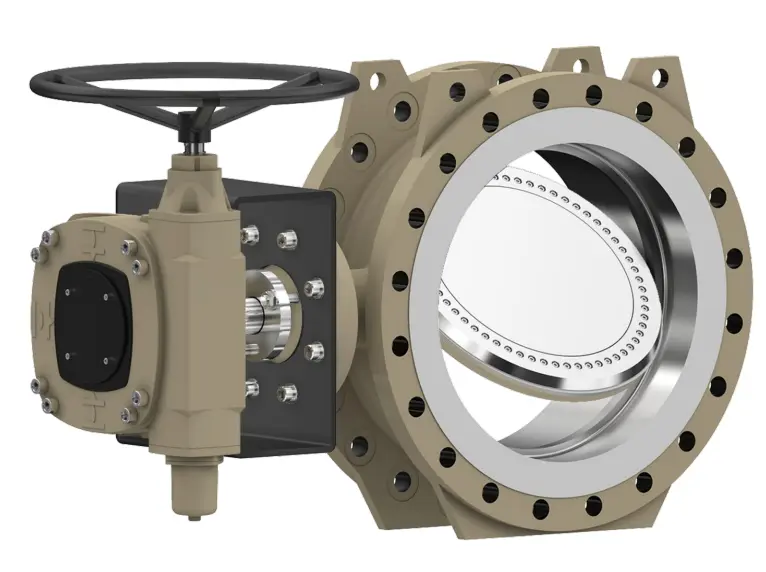
High Temperature Pneumatic Ball Valve in Actual Use
In many projects, problems don’t show up during testing. They show up after the system runs hot for a while. Once temperature goes up, some valves start leaking, torque changes, or the actuator reacts slower than expected. That’s usually when people begin to consider using a high temperature pneumatic ball valve instead of a standard design.
One thing we’ve seen many times — material alone doesn’t solve everything. You can use 316 or CF8M, but if the sealing is not right, the valve will still have issues. In a high temperature pneumatic ball valve, the seat takes most of the load when temperature cycles up and down. Standard soft seats tend to wear faster in this condition.
In some cases, reinforced seats can still work. But when temperature is higher or cycling is frequent, many users move to metal sealing. A high temperature pneumatic ball valve with this setup usually lasts longer, although machining requirements are also higher.
Another point is the actuator side. People sometimes focus only on the valve body, but the actuator is just as important. If heat transfers directly to it, performance drops over time. That’s why a high temperature pneumatic ball valve is often built with an extended stem or a bracket to create some distance. It’s a simple detail, but it helps.
From machining experience, tolerance control matters more in this type of valve. At room temperature, small deviation may not be obvious. But after heating, expansion changes the contact condition. For a high temperature pneumatic ball valve, keeping stable dimensions is important if you want consistent sealing after repeated operation.
In terms of use, most high temperature pneumatic ball valve applications we handle are not extreme, but they are steady — thermal oil, steam, or similar systems. These conditions don’t allow much fluctuation. Once installed, users expect the valve to keep working without adjustment.
Installation also affects performance. If the pipeline is slightly off or thermal expansion is not considered, even a good high temperature pneumatic ball valve may not perform as expected. We’ve seen cases where replacing the valve didn’t fix the issue, but adjusting the installation did.
So in practice, a high temperature pneumatic ball valve is not about one feature. It’s about how everything works together — material, sealing, machining, and how it’s installed in the system. Most of the time, problems are not caused by one single factor, but by a combination of small things.