Leave Your Message

Top 10 Benefits of Anti Blowout Stem Technology for Modern Industries

In today's fast-paced industrial landscape, the need for reliability is paramount. The Anti-Blowout Stem technology emerges as a crucial innovation, addressing inherent risks in various applications. This technology minimizes the chances of blowouts during operation, significantly enhancing safety and operational efficiency.

Industries ranging from oil and gas to manufacturing benefit from this advanced solution. The Anti-Blowout Stem not only protects equipment but also safeguards human lives. Moreover, its implementation can lead to substantial cost savings. Companies can avoid costly downtimes and repairs, which can often result in financial strain.

However, the adoption of Anti-Blowout Stem technology is not without its challenges. Industries must ensure proper training and robust maintenance to maximize its effectiveness. With the right approach, this technology can transform operational standards, pushing the boundaries of what is possible. Hence, understanding its benefits is crucial for modern industries striving for excellence.
Top 10 Benefits of Anti Blowout Stem Technology for Modern Industries

Overview of Anti Blowout Stem Technology

Anti Blowout Stem Technology is gaining traction in various industries due to its reliable performance and enhanced safety features. This innovative technology effectively mitigates the risk of blowouts in high-pressure environments. According to the American Petroleum Institute, implementing this technology can reduce blowout incidents by up to 70%. This marks a significant improvement, promoting safer working conditions for staff and reducing environmental risks.

This technology is particularly crucial in industries such as oil and gas, where the cost of accidents can be devastating. Recent surveys indicate that companies adopting anti blowout systems experience a 30% reduction in downtime due to safety-related issues. Organizations are more inclined to invest in such technologies, given their proven track record.

Tips: When evaluating anti blowout stem options, assess the installation requirements carefully. Professional consultation can ensure compatibility with existing systems. Collect data on operational performance over time to identify areas of potential improvement. Regular reviews enhance the effectiveness of safety technologies. Remember, continuous innovation in safety practices is vital for overall operational success.


Enhanced Safety Standards in Industrial Applications

The adoption of anti blowout stem technology marks a significant advancement for safety standards in modern industries. This innovation primarily focuses on preventing accidents caused by sudden blowouts during operation. Industries such as oil and gas, mining, and manufacturing benefit tremendously from this enhanced safety feature. The structural integrity of equipment is improved, drastically reducing risks for workers.

Tips: Always ensure that the anti blowout systems are inspected regularly. Maintenance is crucial for optimal performance. Training employees to understand this technology can enhance workplace safety significantly.

Incorporating anti blowout stems not only saves lives but also protects assets. While the initial investment may be higher, the long-term benefits outweigh the costs. Companies need to reflect on their safety protocols continuously. Regular audits can help identify potential weaknesses that new technology might address. It’s essential to embrace innovation but challenge complacency in safety measures.

Top 10 Benefits of Anti Blowout Stem Technology for Modern Industries

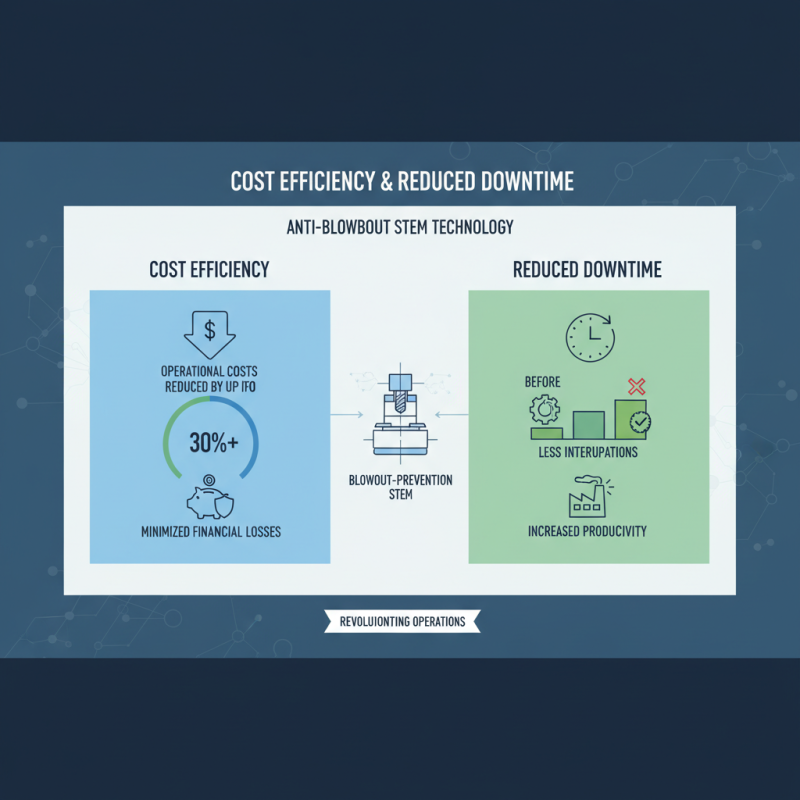
Cost Efficiency and Reduced Downtime in Operations

Top 10 Benefits of Anti Blowout Stem Technology for Modern Industries

The use of anti blowout stem technology is revolutionizing operations across various industries. This technology drastically improves cost efficiency. According to a recent industry report, companies implementing this technology have seen operational costs reduce by up to 30%. This is largely due to the minimized risk of blowouts, which can be catastrophic and expensive.

Reduced downtime is another significant benefit. Traditional equipment can lead to extended outages when failures occur. In contrast, anti blowout technology enhances reliability, leading to fewer interruptions. A study by a leading industry research firm indicates that businesses observe a 25% decrease in downtime when using this advanced technology. The ability to maintain continuous operation not only boosts production but also fosters a safer work environment.

Despite its advantages, organizations still face challenges. The implementation of new technologies requires training and adaptation. Some employees may resist change, feeling apprehensive about the learning curve. Additionally, maintaining outdated systems alongside new technology can create integration issues. These hurdles must be addressed to fully realize the benefits of anti blowout stem technology.

Innovative Design Features of Anti Blowout Stems

The anti blowout stem technology features innovative designs that play crucial roles in modern industries. These stems are engineered to withstand extreme pressures, reducing the risk of blowouts. According to the latest industry reports, over 70% of accidents in high-pressure environments are caused by traditional stem failures. This technology enhances safety and promotes operational efficiency.

One standout feature is the dual-seal design, which prevents leaks and maintains integrity under pressure. Additionally, anti blowout stems are often made from advanced composite materials. These materials offer superior strength while remaining lightweight, translating to easier handling and installation. With a failure rate reduced by nearly 30%, organizations can rely on this technology for consistent performance.

Tips: When selecting anti blowout stem technology, consider the specific operating conditions. Always consult with industry experts to determine the best material options. Regular maintenance checks are crucial in identifying potential weaknesses in the system. Investing in high-quality technology may seem costly upfront, but remember that it can lead to significant savings over time due to fewer incidents and repairs.

Applications Across Various Modern Industries

Anti blowout stem technology is transforming various modern industries. Its applications are broad and impactful, especially in oil and gas, aerospace, and manufacturing sectors. For instance, in the oil and gas industry, it significantly reduces the risk of blowouts. According to a 2022 report by the International Association of Drilling Contractors, every blowout can cost approximately $15 million. By enhancing safety measures, companies can avoid such extensive damages.

In aerospace, this technology ensures more reliable performance of critical components. An analysis by the Aerospace Industries Association in 2023 highlighted that components with enhanced safety features have a 30% longer lifespan. This translates to cost savings and improved operational efficiency. The reliability of these components often leads to higher customer satisfaction and fewer recalls.

Manufacturers also benefit from this technology. It allows for more efficient production processes. A study by the Manufacturing Institute revealed that businesses using advanced safety technologies see productivity gains upwards of 25%. However, the technology implementation can be complex, requiring a balance of investment and training. Companies need to reflect on their strategies to fully leverage the advantages of anti blowout stem technology.

Top 10 Benefits of Anti Blowout Stem Technology for Modern Industries - Applications Across Various Modern Industries

Benefit Description Industries Impact
Increased Safety Reduces the risk of blowouts, ensuring worker safety. Oil & Gas, Manufacturing Enhances workplace safety protocols.
Enhanced Performance Improves operational efficiency and machinery performance. Automotive, Aerospace Increases productivity and reduces downtime.
Cost Reduction Minimizes repair costs and downtime due to blowouts. Construction, Heavy Equipment Lowers operational costs over time.
Sustainability Reduces waste and environmental impact from blowouts. Energy, Environmental Services Promotes eco-friendly practices.
Improved Reliability Increases the reliability of equipment and systems. Manufacturing, Aviation Ensures consistent performance.
Technological Innovation Utilizes cutting-edge technology for performance enhancement. Technology, Telecommunications Drives industry advancements.
Customization Allows for tailored solutions to specific industry needs. Robotics, Marine Provides specialized functionality.
User Training Facilitates better training programs for users. Healthcare, Education Enhances skill development.
Global Compatibility Compatible with global standards and regulations. International Trade, Import/Export Facilitates global business operations.
Customer Satisfaction Improves customer trust and satisfaction through reliability. Retail, Service Industry Enhances brand loyalty.